
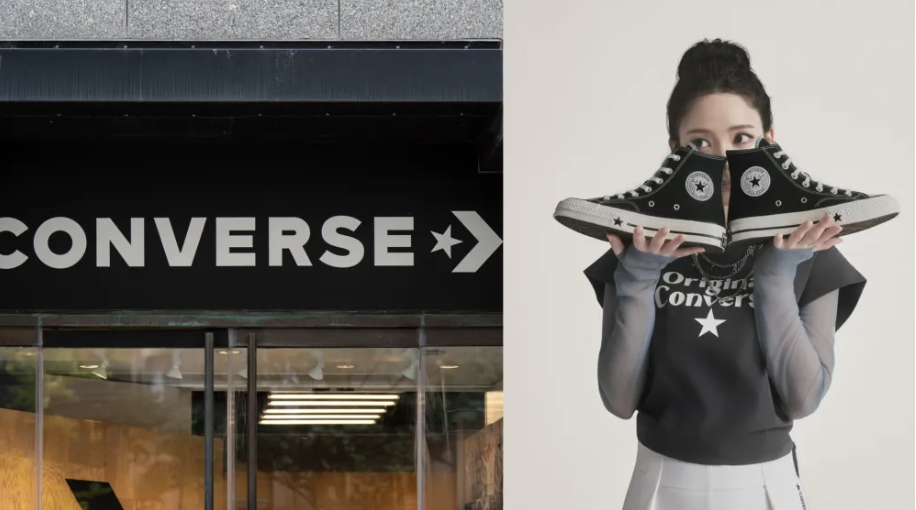
Image via Women’s Wear Daily
***
Converse, a brand best known for its iconic All-American Chuck sneakers, has faced recent controversy over their new Chuck 70 X promotional picture. The image includes a light-skinned model wearing the new Chuck 70 X shoe, which includes a built-in platform, a star, and a black line along the side of the shoe, with accessorized chains hanging from the back of the shoe. The image only shows the model’s shoes and legs, which are mostly covered by a white skirt. The model holds a dangling pair of Chuck 70 X shoes; however, the photograph is cropped to show only the shoes hanging beside her, with her arms and hands excluded from the frame. As Washington Post Reporter Shane O’Neill bluntly explained, “It looked an awful lot like a Ku Klux Klan member’s pointed hood foregrounded by the dangling feet of a lynching victim.”
Considering that marketing, communications, and PR staff put deep thought into using the correct message and image to benefit the brand, it is hard to believe that this image and its message were just an accident. Simple changes, such as having the model wear a similar piece of clothing in a different color, could have changed the message entirely. According to Women’s Wear Daily, Converse replied with a statement saying:
We’re sorry. We understand why this image is deeply upsetting and recognize that we got this wrong. We removed it from our channels and are working to remove it everywhere it appeared. This should not have happened, and we will do better.
Converse CEO Aaron Cain removed this ad from all platforms and publicly announced that “The leadership team and I are taking a hard look at our internal review process and the critical lens we apply to our work…We will learn from this, make needed changes, and do better.”
This moment of faulty marketing brings to light another question: How many times have companies made similar accidents that “unintentionally” highlighted hate groups? German autombile company Volkswagen’s past makes it a prominent example. Volkswagen heavily relied on forced labor in military production, forcing Jewish and non-Jewish labor to produce such cars. In addition, Volkswagen operated four concentration camps and eight forced labor camps during World War II. Despite this disturbing past, Volkswagen has turned a new leaf and used its marketing to distance their brand’s image from its origins that supported Nazi Germany to become an extremely popular and reliable brand globally.
Many other companies have made marketing mistakes that framed their company as discriminatory and racist. In February 2019, luxury fashion brand Gucci pulled a wool jumper from stores that featured a darker-skinned face with enlarged red lips, resembling blackface. In 2018, a Heineken advertisement promoting its lighter beer depicted a bartender passing a Heineken bottle across the bar, past three black people, and landing in the hands of a white woman. For this lighter beer, Heineken used the tagline, “Sometimes, lighter is better.” For obvious reasons, this advertisement sparked controversy among viewers, causing celebrities such as Chance the Rapper to tweet about how “terribly racist” the ad was. Considering the various instances in which companies have overlooked the deeper, harmful messages conveyed through their advertisements, does Converse deserve to be pardoned for what some may consider a minor misstep, or should the company face greater consequences for its actions?
Converse’s public image could have been severely damaged had the CEO not gone to great lengths to remove the controversial Chuck 70 X advertisement from online platforms. However, the sheer presence of such commentary shows how far businesses are from even considering the harmful implications simple advertisements may have on the general public. In this case, Converse dismissed how their advertisement may affect the general public, especially considering the Ku Klux Klan’s prominent role in the American past and present as a domestic terrorist organization. Converse has made an effort to reshape the public’s perception of the brand; however, this advertisement remains difficult to ignore. Whether it was a simple mistake or a calculated decision by a member of Converse’s marketing team, its impact cannot be easily erased. For Converse, this advertisement may have lasted only a moment, but the impression it left on the public may last much longer.
***
This article was edited by Melisa Sezgin and Kaitlyn Horn
 Thomas Tisdale
  Giovanni Esposito
  Emma Trauner-Coady