
Photo via iStock
***
Apoliticism has become a cultural posture. Many a time has “I don’t do politics” been said as some way to justify a lack of political knowledge or insight. It is framed as maturity, neutrality, even moral superiority. In an era defined by polarization and exhaustion, the refusal to engage with politics can feel like self-projection. Yet apoliticism is rarely neutral in practice. It often reflects one’s privilege and limits the democratic imagination at precisely the moment when participation matters the most.
The trend is visible across pop culture. At the recent 2026 British Academy of Film and Television Arts (BAFTA)s, American film director Paul Thomas Anderson accepted the awards for Best Film, Best Director, and Best Adapted Screenplay for his 2025 film One Battle After Another. Nominated for 13 Academy Awards at the upcoming 98th Oscars, it is a film widely interpreted as politically charged for its themes on revolution, white supremacy, and government overreach.
While being interviewed post-BAFTA win, however, Anderson declined to discuss contemporary politics publicly. Coverage of the ceremony focused on the film’s artistic success rather than its ideological context, highlighting the persistent separation many creators attempt between art and political responsibility.
Contrast this with Brazilian actor Wagner Moura, whose career reflects a different philosophy. Moura has repeatedly emphasized that he gravitates toward films with social meaning and political resonance, explaining that he tends to see political dimensions in artistic work even when others do not. His outspoken criticism of Brazil’s political climate has generated backlash, illustrating the risks attached to engagement. Yet his stance underscores a broader claim: art does not exist outside politics because it is produced within social systems shaped by power, identity, and inequality.
Apoliticism thrives on the assumption that politics is an optional domain. Political psychologists challenge this assumption. Research on efficacy shows that disengagement correlates with feelings of powerlessness and learned helplessness, reinforcing cycles in which citizens withdraw from public life while elites retain influence. Scholars drawing on Antonio Gramsci’s theory of hegemony argue that power is most effective when it appears natural or inevitable. In this framework, apostolicism functions as consent. The absence of visible opposition stabilizes existing hierarchies by removing friction.
Privilege plays a central role in this dynamic. For many marginalized communities, politics is inseparable from everyday survival. Immigration policy shapes family stability, criminal justice policy shapes bodily safety, and housing policy shapes economic mobility. The ability to disengage often reflects insulation from immediate policy consequences. Sociologists describe this as “structural buffering,” the phenomenon in which individuals with economic or social capital experience fewer direct harms from political decisions and therefore perceive politics as abstract. Apoliticism becomes a luxury.
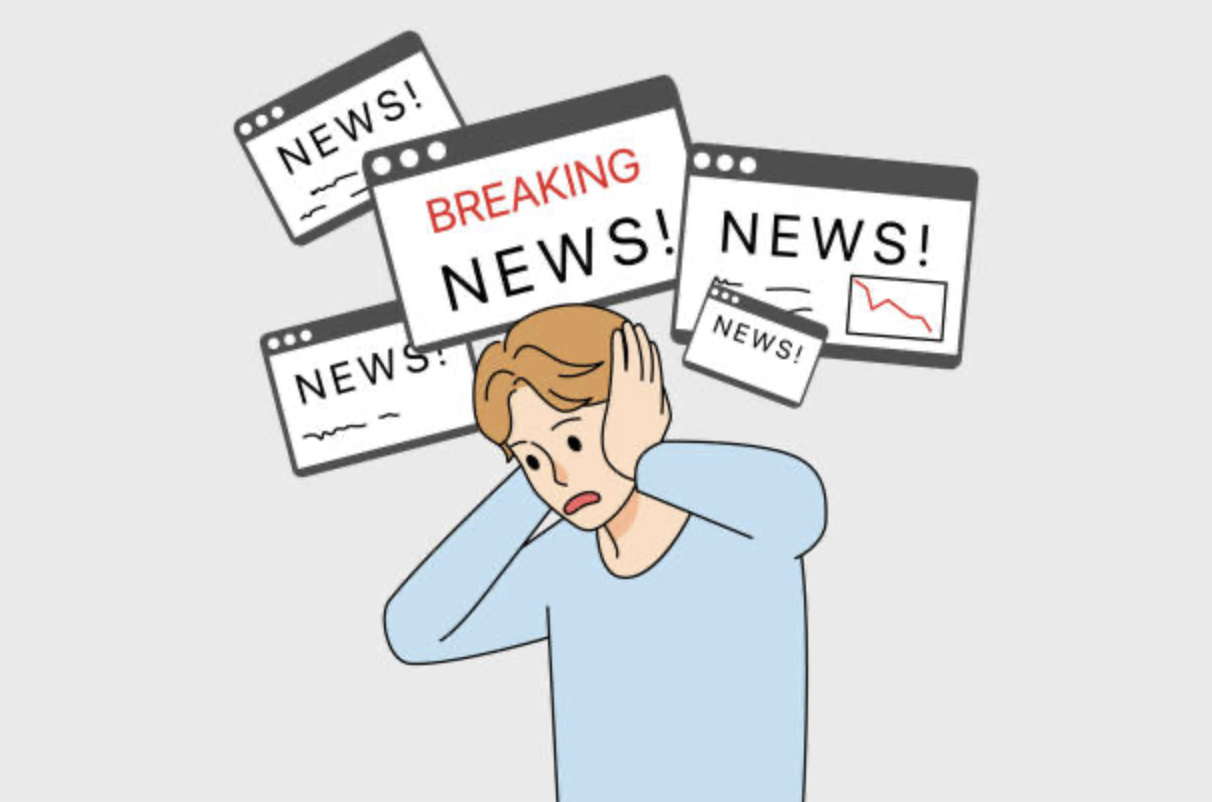
Recent cultural trends reinforce this posture. Surveys by organizations such as the Pew Research Center indicate rising political fatigue, especially among young adults who report anxiety and burnout related to constant news exposure. The algorithmic environment intensifies this fatigue. Social media platforms reward outrage, accelerate conflict, and collapse nuance, making withdrawal psychologically appealing. Yet disengagement does not reduce politics’ influence over individuals’ lives. It simply reduces individuals’ influence over politics.
Real-world examples reveal how apoliticism can shape institutional outcomes. Corporate neutrality statements during social movements often function as reputational management rather than ethical positioning. Professional athletes who avoid political expression receive fewer endorsement risks than those who speak out, reflecting market incentives that reward silence. Entertainment industries demonstrate similar patterns. To avoid controversy, celebrities maintain broader brand appeal, while outspoken figures encounter targeted backlash. The structural messaging is clear: neutrality is safer.
However, neutrality is not passive. Political theorist Hannah Arendt argued that the refusal to act in public life enables injustice by default. Democratic systems rely on participation not only through voting but through discourse, protest, and cultural expression. When influential figures claim apoliticism, they contribute to a cultural narrative that politics is optional or distasteful, weakening democratic norms of engagement.
The arts provide a revealing lens. Artistic production shapes public imagination, often more effectively than formal political rhetoric. Films, music, and literature construct narratives about identity, morality, and social possibility. When artists deny the political dimensions of their work, they obscure the ideological framework embedded within storytelling. Moura’s insistence on art’s political nature reflects an understanding that cultural narratives are vehicles of power. Anderson’s reluctance, by contrast, reflects a long-standing tradition of aesthetic autonomy that attempts to isolate artistic value from political meaning. The tension between these approaches mirrors broader debates about cultural responsibility.
Apoliticism also carries global implications. Authoritarian Movements frequently benefit from public disengagement. Political scientists note that democratic erosion often occurs gradually through institutional weakening rather than dramatic coups. Citizen apathy creates the conditions under which such erosion proceeds with limited resistance. Historical examples across Latin America, eastern Europe, and Asia demonstrate that democratic backsliding is rarely accompanied by universal political mobilization. Silence is not consent, but it can produce similar outcomes.
Psychologically, apoliticism may function as identity management. Individuals seek coherence between self-concept and social environment. In polarized contexts, identifying as apolitical allows individuals to avoid interpersonal conflict while maintaining a sense of moral neutrality. Yet, this identity can obscure implicit political behaviors. Consumer choices, workplace dynamics, and cultural preferences all carry political consequences. The claim of apoliticism often masks participation rather than eliminating it.
This does not mean that constant political engagement is psychologically sustainable. Burnout is real, and individuals require boundaries. The problem lies in framing disengagement as virtue rather than coping strategy. A healthy democratic culture recognizes both the necessity of participation and the legitimacy of emotional limits. Apoliticism becomes harmful when it transforms from temporary withdrawal into normative ideals.
Ultimately, the debate is less about whether individuals must speak on every issue and more about how societies interpret silence. Public figures who claim neutrality participate in shaping norms of engagement, just as outspoken figures do. Moura’s willingness to risk backlash demonstrates the political stakes of artistic expression. Anderson’s silence reflects a compelling model that prioritizes artistic autonomy. The tension between these positions reveals the broader cultural struggle over the meaning of political responsibility.
Apoliticism promises peace but often delivers invisibility. It allows structural inequalities to persist without challenge, frames politics as optional for those protected from its harshest consequences, and narrows the democratic imagination. In a moment defined by social transformation, disengagement is itself a political act.
The question is not whether politics will shape our lives. It already does. The question is whether we choose to shape politics in return.
***
This article was edited by Peter Leyba and Madison Boyd.
 Glenmarie Rios Rodriguez
  Sidney Levitt
  Ayden Suber