
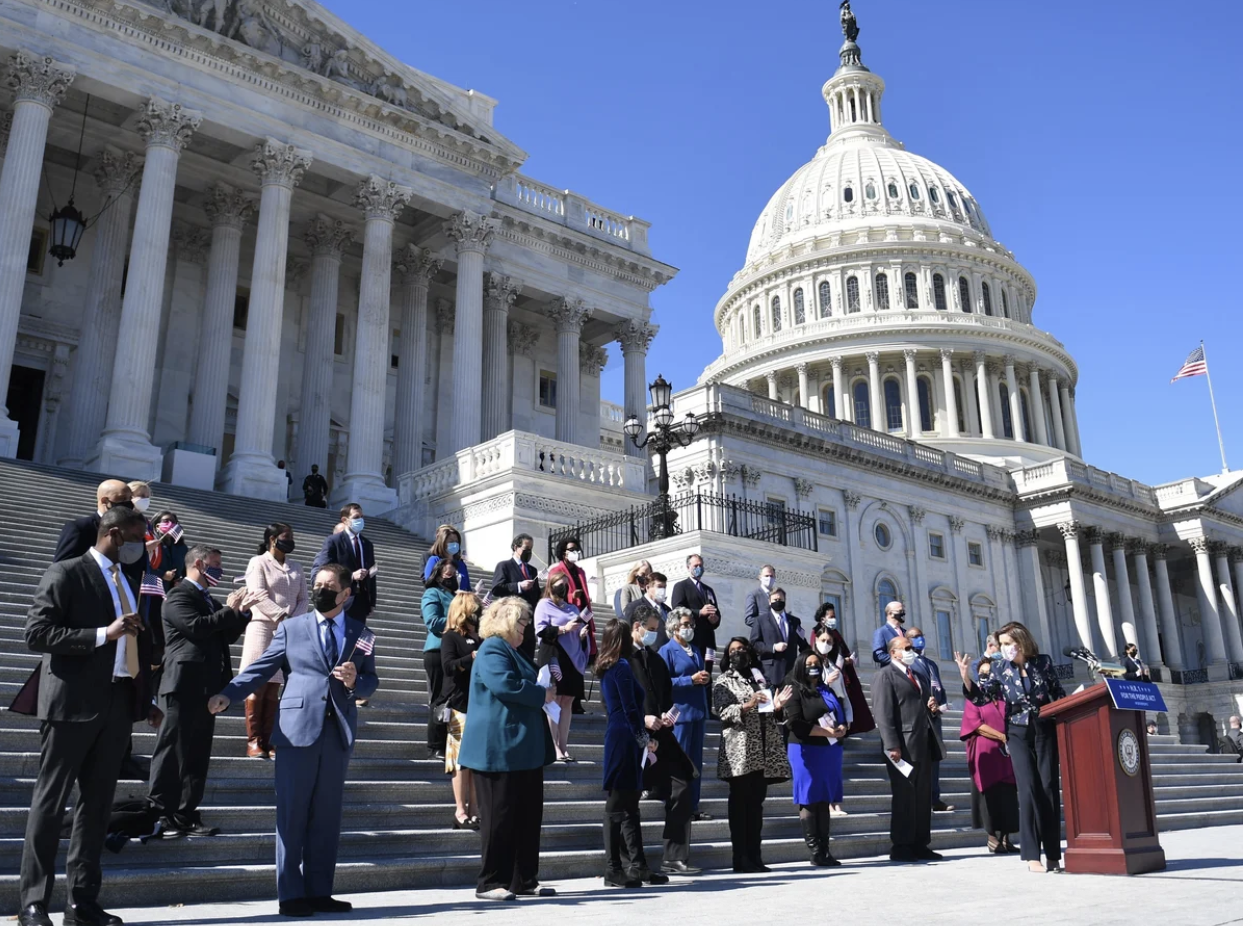
Photo via NPR
***
In January of 2023, Representative Sean Casten (D-IL) introduced the Equal Voices Act, a piece of legislation that would increase the number of districts in the House. The bill would “uncap” the House of Representatives using the “Wyoming Rule,” which would divide the national population by the population of the least-populated state to increase the number of congressional districts in the chamber. Under the 2020 Census, the body would increase from its current 435 members to 573, with much of the gains occurring in highly populated states like California, Texas, and New York.
In the three years since its introduction, the passage of the Equal Voices Act has been unsuccessful, even with its reintroduction in the following session of Congress. However, an examination of both the House’s past and the importance of representation in the future presents a compelling case to re-consider the bill and the need to expand Congress’ lower chamber.
The History of the U.S House
The United States House of Representatives was formed in 1787 under the Great Compromise, which combined aspects of two different proposed plans and established a bicameral Congress. While the Senate would offer equal representation to each state, the House would allocate seats to states proportional to their population—with higher-populated states receiving more representation in the chamber.
The first House had 65 representatives, with each representative initially serving around 30,000 people. Today, it has 435 members serving more than 330 million people, with each district representing almost 800,000 constituents, a stark contrast to these initial small districts. So how did congressional districts get so large in the modern age?
In 1929, Congress passed the Permanent Apportionment Act, which limited the House to the current 435 representatives – though this number has remained unchanged since 1913, barring the temporary addition of two representatives for Alaska and Hawaii following the achievement of statehood in 1959. In the near-century since the bill was signed into law, the United States’ population has increased by over 200 million people, yet the number of representatives has remained the same.
This flaw reveals a fundamental paradox: The House is not completely “representative” for every state. While each member of the chamber technically has the same voting power, representatives in some states represent fewer constituents than others, giving their vote more power. Wyoming has approximately 30% more representation compared to the average congressional district, thus giving the residents of the state’s sole congressional district disproportionate impact at the polls.
The limit of 435 representatives also results in the reapportionment of seats between states following the decennial Census, even if they continue to grow. 7 states lost a congressional seat in the 2020 census, even though 5 of the 7 reported an increase in population compared to their numbers in 2010.
Concerns about adequate representation in the House are not a recent phenomenon and have existed since its conception. Founding Father and future President James Madison believed that smaller districts would ensure “that congressional delegates could remain attuned to the issues facing the American people.” He proposed an amendment to be part of the Bill of Rights that would increase the number of seats in the House as the population of the average district grew. The amendment was never ratified, but Congress continued to regularly expand the House as a result of population growth and the admittance of new states into the Union until 1929.
Critics of a proposed expansion of the House argue that such a measure would be costly both in paying salaries and creating infrastructure to accommodate an increased number of representatives. This initiative would also require a restructuring of committees and processes central to the House, which could slow the process of legislation for a Congress already considered to be ineffective by the general public.
While these drawbacks are important to acknowledge, it is clear that Congress should remove the limit on delegates in the House to ensure equal and equitable representation for Americans. The Equal Voices Act gives an opportunity for meaningful reform, and it should be brought to the floor for debate and passage.
To express your own thoughts on this bill, write or call your representatives in Congress to ensure your voice is heard and bring attention to this issue.
***
This article was edited by Abigail D’Angelo.
 Sarah Olivia Sullivan
  Luke Helmholz
  Gavin O'Sullivan