
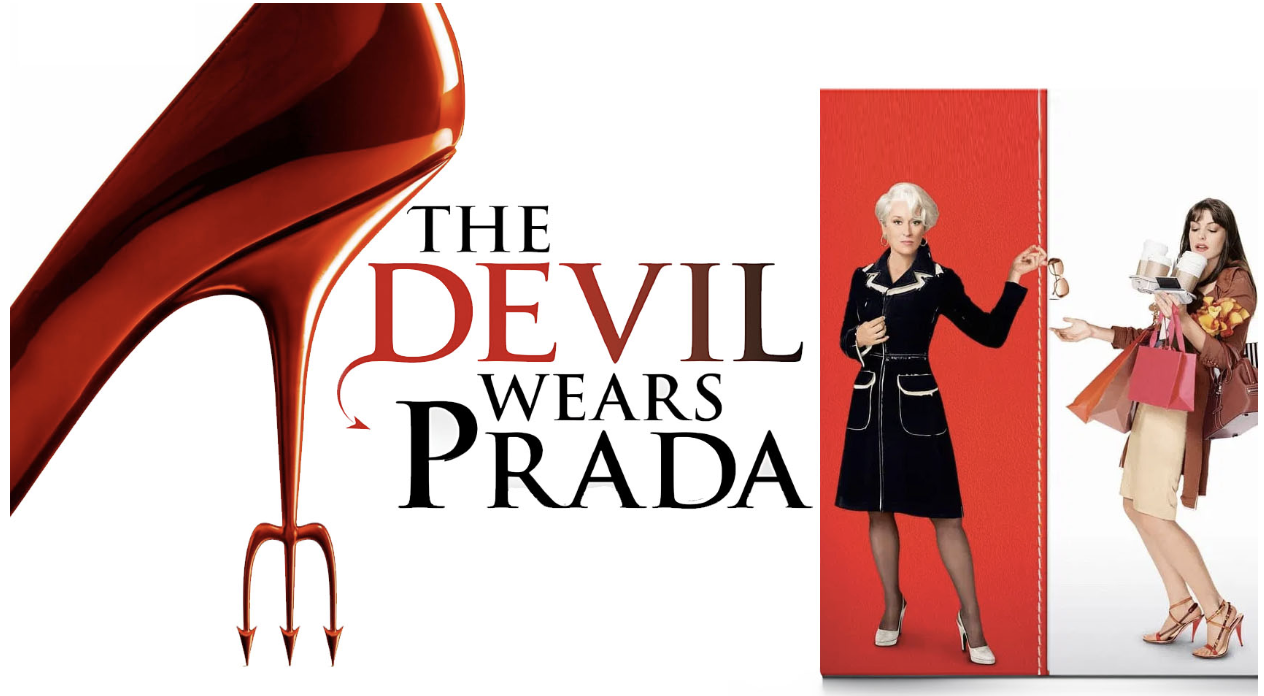
Image via Short Northern Civic Association
***
Fashion continues to be a landmark of the intersection between culture, identity, and politics. Through the curation of fabric and the layering of pieces, each individual look that hits the runway serves as a voice in the industry allowing cohesion to be an act of defiance against cultural norms and the prima facie of everyday life.
One designer who can be attributed to this role within the ‘art’ of defiance is Miuccia Prada. Political Science PhD, graduate of Milan University, and now Italian Fashion designer and co-creative director—alongside Raf Simmons—Miuccia Prada has yet to shy away from giving her art the responsibility of advocacy. Growing up after the Fascist Regime dictated by Bennito Mussolini (1925-1945), Italy was still navigating who it is as a nation post-war.
Under Mussolini’s rule, the nation was under pressure to adhere to the many implications that Facism brought about. Fascism entails the creation of a homogenous nation, where identity is depleted from existence. Individuals must remain in the confines of the identity that the nation prescribes them to. Within the realm of the heavily divided class system between the North and the South, the North being where Miuccia was reared, existed a concept of ‘class cooperation.’ Under these ideals inequality was embraced as an inevitability to living. Despite the divides still exists an idea of unity within groups to promote the ‘welfare’ of the state.
In the case of clothing and lifestyle, women were to exhibit utmost femininity in the way they act and dress. By 1935 came the establishment of the Ente Nazionale Della Moda, an organization implemented into the regime to dictate women’s dress. The purpose was to unite the Italian front by removing French clothing and materials from the markets, thus establishing a wholly Italian identity. Pants were looked down upon, as dresses and skirts better fit the persona of the Fascist mind. The same applied to shoes; heels were preferred over flats to portray the ‘ideal Italian woman.’
Prada’s opening collection of the Fall/Winter 1988 Milan show, was highly representative of her views and ideology as a person living in Italy during such a prevalent time of innovation. As an inherently political individual and feminist, she was historically part of the Italian Communist Party and the Union of Italian Women. These characteristics of her identity were apparent in her work displayed in this first show of hers.
Made to defy the wrongfully placed ideals of Facism and the Mussolini regime—Prada created a show ridden with anti-fascist symbolism. Suits resembling the uniforms of the Voluntary Militia for National Security, the “Black Shirts” were everywhere. Prada’s dress forms were anything but flattering, as the evolution of the term “ugly chic” came about in the style she chose to acquaint herself with.
The looks presented opposed the ‘ideal Italian woman’ facade in all respects, instituting a serious approach to the pragmatics of feminism. Women were and are capable of doing things that go beyond the traditional role of care-taker and house keeper. Especially, during a period in which men were less present at home due to the obligations of war, women had to adapt to the look of ‘tomboy’ in their newfound roles.
This long history following Miuccia Prada’s life and career, does not stop with her first show. The designer continues to implement politics and identity into her works even now. Her latest Fall/Winter 2026 collection, is a farther adapted and vivid portrayal of the same motifs displayed in her Fall/Winter 1988 collection; this time without the anti-facist undertones.
The collection seeks to promote the ‘ideal woman’ not the ‘ideal Italian woman.’ Prada describes the collection as “An embrace of inherent pluralities, a reflection of the multifaceted realities of women and the complexities of life.” Both like and unlike FW88, each look strays away from the confines of traditional femininity, instead embracing the luxury of looser clothing, the beauty of curiosity, and the spark of individuality. Women are clearly not who they are told to be. Layers create nuance and in nuance comes the production of stories. Both memory and history are defined in the ways in which presentation alludes to a narrative of a person that runs much deeper than surface level.
These silent acts of activism serve as a reminder that art has purpose in our world to speak to the injustices that are being faced. In every silhouette, Prada is able to remind us that we cannot be assigned a definition of identity nor are we obligated to follow one. Identity is constructed; through layers, evolution, and reclamation. The nature of fashion is not what we wear, but rather, how we choose to be seen. The Devil does not wear Prada; Prada allows the spectacle of clothing to be the image of power and resistance through art.
***
This article was edited by Olivia Fiorenza.
 Ayden Suber
  Isabella Villalobos
  Abby Coxe