
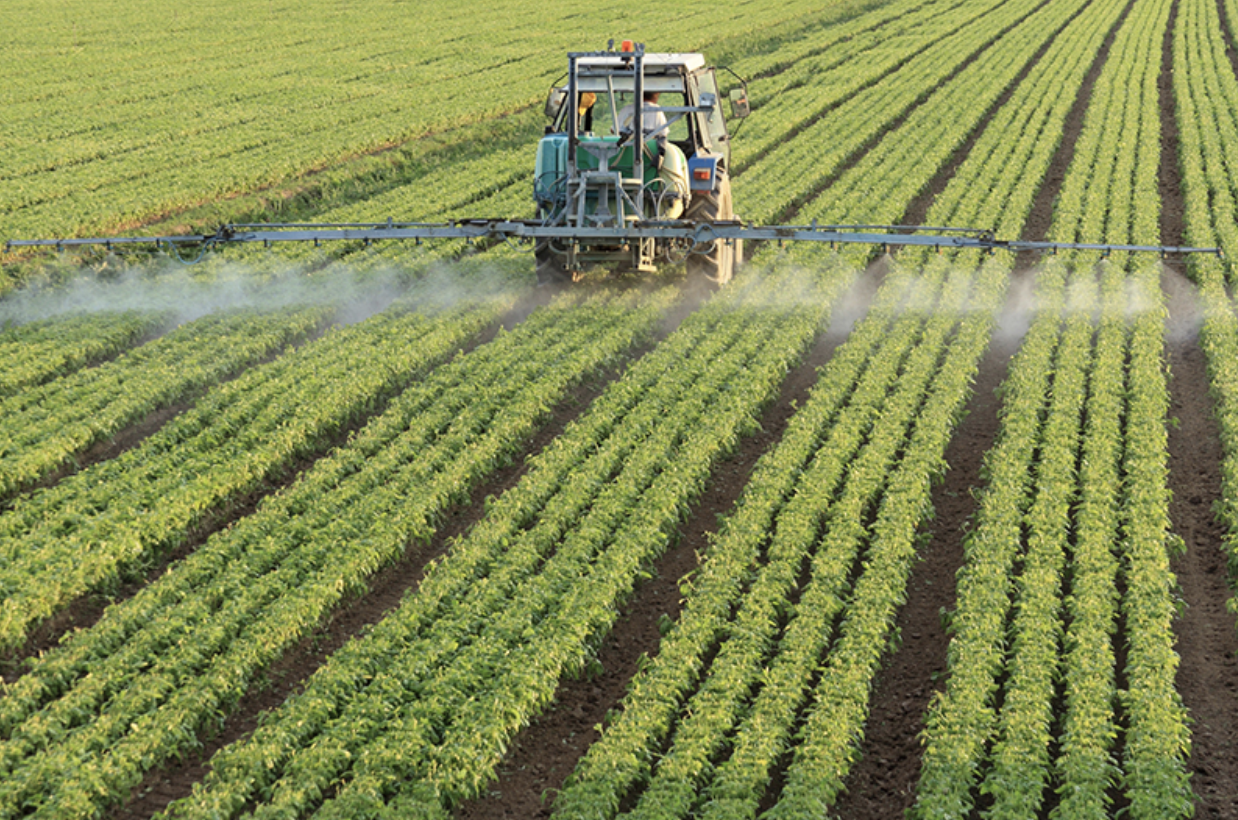
Photo via State of the Planet
***
The US-Iran War has dominated headlines over oil and energy prices, but a slower, much more devastating crisis is unfolding in the background. Fertilizer is not getting through the Strait of Hormuz; therefore, a global fertilizer shortage threatens to affect billions of people at the grocery store and on the farm. Fertilizer is essential for growing healthy crops and ensuring high yields; without enough fertilizer, farmers produce less food, which quickly leads to lower supply and higher prices for everyone.
The Strait of Hormuz, which is located between Iran, the UAE, and Oman, is now severely restricted, as it has been since February 28th. Roughly 3,000 ships sail through the strait each month; this has significantly decreased, and traffic has collapsed by over 90%, with Iran threatening to attack tankers and other vessels. As of April 2nd, non-profit United Against Nuclear Iran claims there had been at least 24 commercial vessels hit, plus three near misses. According to Arne Lohmann Rasmussen, chief analyst at Global Risk Management, all that can be done is to wait until the security situation is better, “while there is no physical blockade, threats from the Iranians, plus drone and missile attacks, mean tankers are not going through the strait.” As a result of this, Urea, a nitrogen-based fertilizer, prices have spiked from ~$490 to ~$700 per metric ton—up 50% since the war began.
With these points taken into consideration, China has blocked phosphate exports, and Russia has suspended ammonium nitrate exports. These two are crucial to crop growth. Nitrogen promotes growth, and phosphorus promotes roots and seeds. When these exports stop, the fertilizer supply drops. Unlike oil, there are no strategic fertilizer reserves in place. No navy escorts prioritize fertilizer ships over oil tankers. Nitrogen fertilizer, unlike potash or phosphate, cannot be skipped even one season without destroying crop yields; this is what makes the current crisis potentially more pressing than the 2022 Ukraine-Russia fertilizer shock.
Unfortunately, this is happening right now during the Northern Hemisphere’s spring planting season, which is mid-February to early May. The FAO warns that there is a three-month window before the damage becomes irreversible. American farmers are already at 75% of the normal fertilizer supply entering the planting season.
This evidence now raises the question of who will be affected by this crisis. Wealthy countries like the United States will see grocery price hikes. “The price of food is going to move quite a lot,” said Kjetil Storesletten, an economist and professor at the University of Minnesota. For Americans, the increase will most likely be gradual, but even a 50-cent increase adds up on a large grocery bill. Experts say there could be an increase of 12%-18%, which could mean $100+ on groceries more per month. But the real victims are the Global South. Brazil imports 85% of its fertilizer, India is facing reduced domestic production ahead of the monsoon season, and East African farmers were already stretched before the crisis. These countries anchor global staple crop production. Food prices and availability are expected to take a hit almost immediately (now, Spring 2026), and most consumers will start to notice higher food prices within 6-12 months, with prices persisting into 2027.
Politically, world leaders and media are laser-focused on oil prices and military escalation. Food security is an afterthought. Although the UN Secretary-General has appointed a special envoy, diplomatic action remains slow. The American Farm Bureau has written directly to President Trump asking for the Navy to prioritize fertilizer shipments. This is what they requested:
- Use the U.S. Navy to help keep fertilizer shipments safe and moving through key sea routes.
- Work with other countries to keep shipping lanes open and avoid delays.
- Make sure ships carrying fertilizer can get insurance and financing support.
- Improve the ability to move fertilizer within the U.S. using ports, rail, and barges so it reaches farms on time.
- Loosen shipping restrictions between U.S. ports to increase transport capacity.
- Expand which fertilizer-related materials qualify for trade exemptions.
- Temporarily reduce or pause import tariffs on fertilizers to help keep prices lower.
There is no clear report on whether President Trump responded to this letter or not.
All points considered, wars end, harvests do not wait. Every week the Strait stays closed is a week closer to a food crisis that will outlast the conflict itself by years, and barely anyone is talking about it. This is the crisis that should be on every front page.
[Editors Note, April 18, 2026]: After this article was written, the United States and Iran have agreed to a temporary ceasefire, which includes a reopening of the Strait of Hormuz. While this may ease immediate shipping disruptions, the agreement is short-term and the broader conflict—and its impacts on global fertilizer supply—remain unresolved.
***
This article was edited by Abigail D’Angelo.
 Sarah Olivia Sullivan
  Luke Helmholz
  Gavin O'Sullivan