
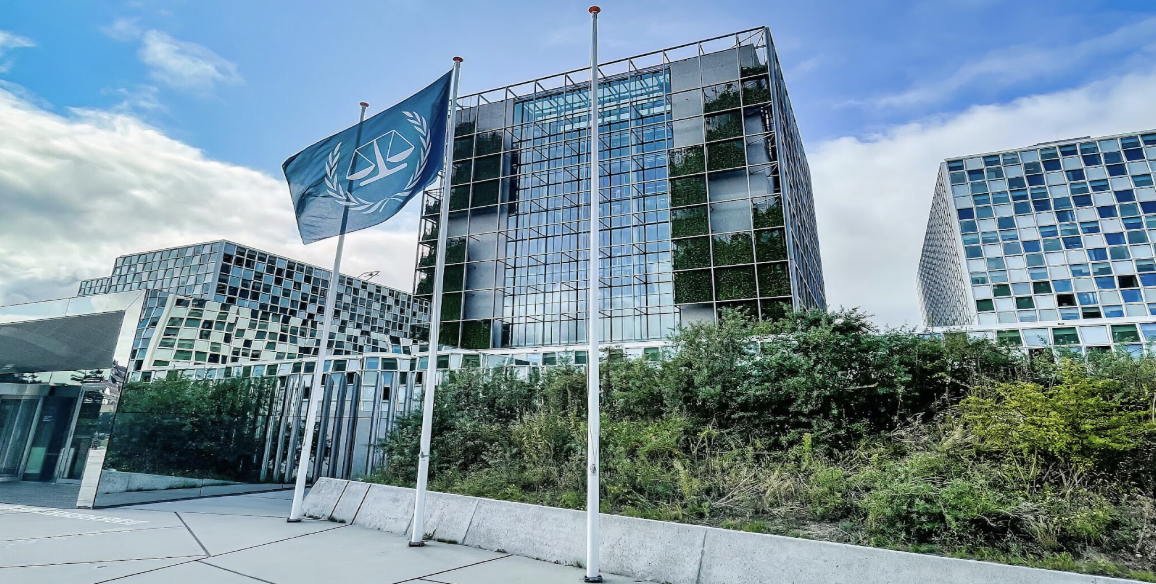
Photo via Avocates Sans Frontières
***
The International Criminal Court (ICC) was founded in 2002 to prosecute the world’s most heinous crimes: genocide, crimes against humanity, and war crimes. Its creation marked a major shift in international law, establishing a permanent institution designed to hold individuals accountable when national leaders fail. The court provided the international community with legal mechanisms and statutes to respond to atrocities rather than relying on temporary echo chambers created after the fact. This being said, there has been speculation raised about the true effectiveness and reach of the jurisdiction of the International Criminal Court.
One of the largest issues that the ICC faces is structural, as the International Criminal Court does not utilize an independent police force. It relies on member states to arrest suspects, provide evidence, and comply with its rulings. This dependency creates a fundamental limitation. Essentially, when states cooperate with the Court, the Court can function. Arrests are made, and individuals appear before the Court. However, when states cease to cooperate (which happens often), justice cannot be served. This makes the ICC different from domestic courts, which generally operate with direct enforcement mechanisms. Domestic courts usually operate with police, prosecutors, and prisons, however, the International Criminal Court is unable to because of the global aspect.
The Court issued arrest warrants for Sudan’s former president, Omar al-Bashir, on charges including genocide, illustrating the problems within the ICC. For a plethora of years, he traveled to ICC member states without being arrested or punished by states. These states were legally obligated to detain him but chose not to, often citing political or regional considerations, thus the court has no grounds to enforce compliance. Until domestic political changes within Sudan shifted the situation, the ICC remained unable to bring him into custody. The nation state of Jordan assisted in his arrest, but until then, the International Criminal Court was incapable of stepping in.
It is because of its lack of police force that the International Criminal Court has lacked success in convictions. According to the International Criminal Court themselves, out of 74 defendants, there have been 5 concluded investigations. 34 defendants remain at large.
The Court’s limited reach is also tied to its jurisdiction. Not all nations are members of the ICC, and some of the most powerful states in the international system have chosen not to join, knowing that they could be prosecuted for past offenses. This restricts where and how the Court can operate. In many cases, it can only pursue investigations if crimes occur on the territory of a member state or if a situation is referred to by the United Nations Security Council. That requirement introduces another political barrier, as Security Council referrals are shaped by veto power and geopolitical interests rather than just legality.
In addition to enforcement challenges, the ICC faces significant financial burdens. International investigations utilize a multitude of resources. Gathering evidence from conflict zones requires coordination across multiple jurisdictions, protection for witnesses, and long-term legal processes. While the exact cost per trial varies, the overall budget of the Court reaches around 900 million dollars per trial. For critics, this raises concerns about efficiency, particularly when the number of completed cases remains limited. Supporters, however, argue that prosecuting crimes of this scale will always be expensive, especially when the alternative is allowing immunity for mass atrocities.
The combination of high costs and constant limited outcomes contributes to skepticism about the Court’s effectiveness. Some argue that the ICC functions more as a symbolic institution than a Court that enforces international law. At the same time, it is important to recognize that the ICC operates within the constraints of the international system. It was designed to complement, not replace, national courts. Its effectiveness is therefore tied to the willingness of states to support it. Without broader political alignment, its ability to act remains restricted.
The International Criminal Court represents an important expansion of international law, but its limitations are blatant. Its reliance on state cooperation, restricted jurisdiction, and high operational costs all contribute to a gap between its goals and its results. The ICC’s inherent reliance on states who have more incentives to hinder the Court rather than cooperate, leaves its effectiveness up for debate.
***
This article was edited by Emma Zadrima and Margot Sleeman.
 Abby Coxe
  Campbell Brown
  Holmes Wormald