
Photo via India Today
***
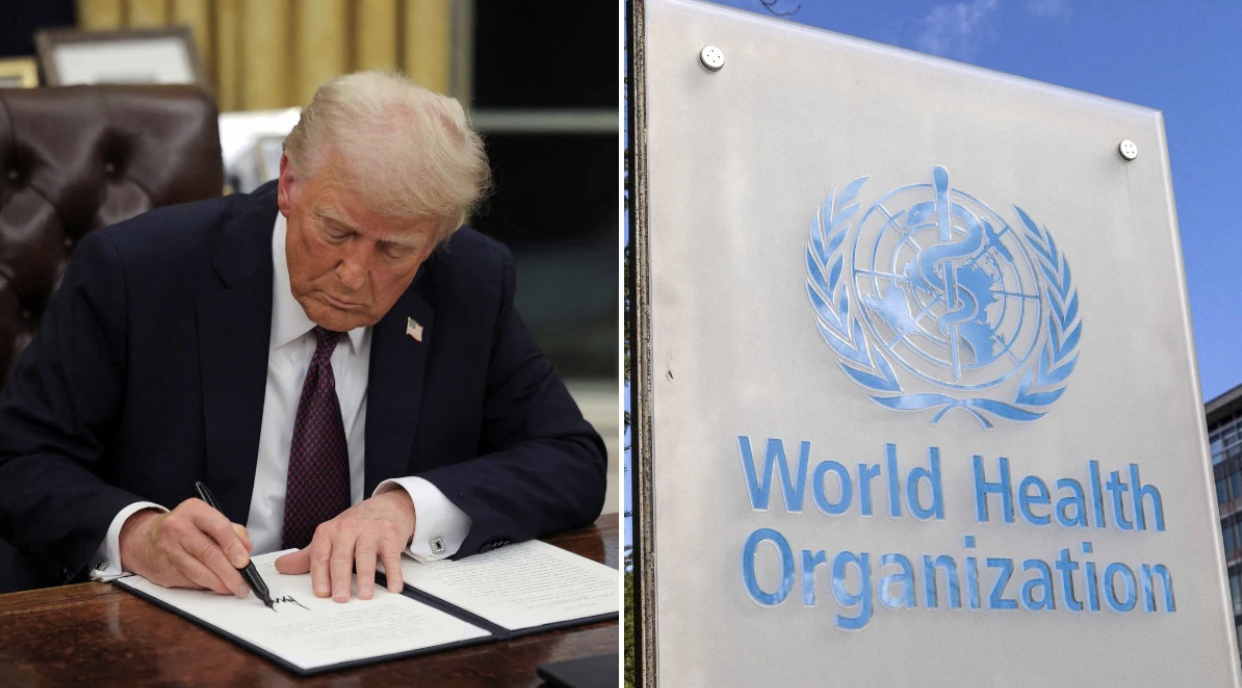
On his first day in office, President Donald Trump signed an executive order withdrawing the United States from the World Health Organization (WHO), and the United States officially left the organization on January 22, 2026, due to its one-year notice period. This decision by the Trump Administration is based on the belief that the WHO has a history of mishandling global health crises and showed direct favoritism toward China during the COVID-19 pandemic, implying it is heavily swayed by its member states. In a joint statement, Secretary of State Rubin and Secretary of Health and Human Services Kennedy stated that, “like many international organizations, the WHO abandoned its core mission and acted repeatedly against the interests of the United States.” This administration also believes that the U.S. has been disproportionately contributing financially to the organization. After the withdrawal, WHO Director General Tedros Adhanom responded to these claims, stating, “Unfortunately, the reasons cited for the US decision to withdraw from WHO are untrue. The notification of withdrawal makes both the US and the world less safe.” However, the United States has continued to stick with its withdrawal plan without concerns about its consequences.
The U.S. has been the WHO’s most prominent financial supporter, contributing about 18% of its total funding. Because of this, the departure has led to an economic crisis for the organization, forcing them to cut a quarter of its staff and to implement budget cuts and restrictions. The WHO had been in a difficult position before the formal withdrawal was finalized, as the U.S. had already been withholding its annual dues to the organization for 2024 and 2025.
In response to the federal government’s decision to withdraw from the WHO, states have taken it upon themselves to help mitigate the consequences this could have on Americans. Governor Gavin Newsom led California to become the first state to join the WHO’s Global Outbreak Alert and Response Network (GOARN). This network, coordinated by the WHO, brings together public health institutions, response organizations, national governments, and academic laboratories to address global health threats. On February 3rd, 2026, Illinois followed in their footsteps. It became the second state to join GOARN as its Governor, Pritzker said, “by withdrawing from the World Health Organization, Donald Trump has undermined science and weakened our nation’s ability to detect and respond to global health threats.”
Because of this administration, leadership shifts within the Centers for Disease Control and Prevention have caused the agency to lose transparency and scientific credibility. In response, U.S. Governors have taken steps to counteract the public health risks created by these federal policy changes. In September of 2025, the governors of California, Oregon, and Washington announced the West Coast Health Alliance, designed to uphold scientific integrity in public health policy across these states. Subsequently, in October of 2025, Governor Newsom and 14 other governors formed a broader coalition of states whose mission is also to ground public health policy in science rather than political influence. And lastly, at the end of 2025, Governor Newsom introduced the Public Health Network Innovation Exchange, which is a California-led initiative that aims to improve public health infrastructure and foster science-based decision-making within the state.
These steps reflect a growing effort to compensate for the federal government’s refusal to cooperate with established multi-nation global health corporations. The withdrawal from the WHO not only raises funding concerns for an international organization that aids health crises worldwide but also harms our relationships with global health partners, leaving American citizens more vulnerable to international health threats. It also weakens the United States’ ability to respond effectively and address our own health crises. These state-level coalitions and international partnerships acknowledge what is at stake in the wake of this decision.
***
This article was edited by Ananda Ramdass.
 Sarah Olivia Sullivan
  Luke Helmholz
  Gavin O'Sullivan