
Image via INSS
***
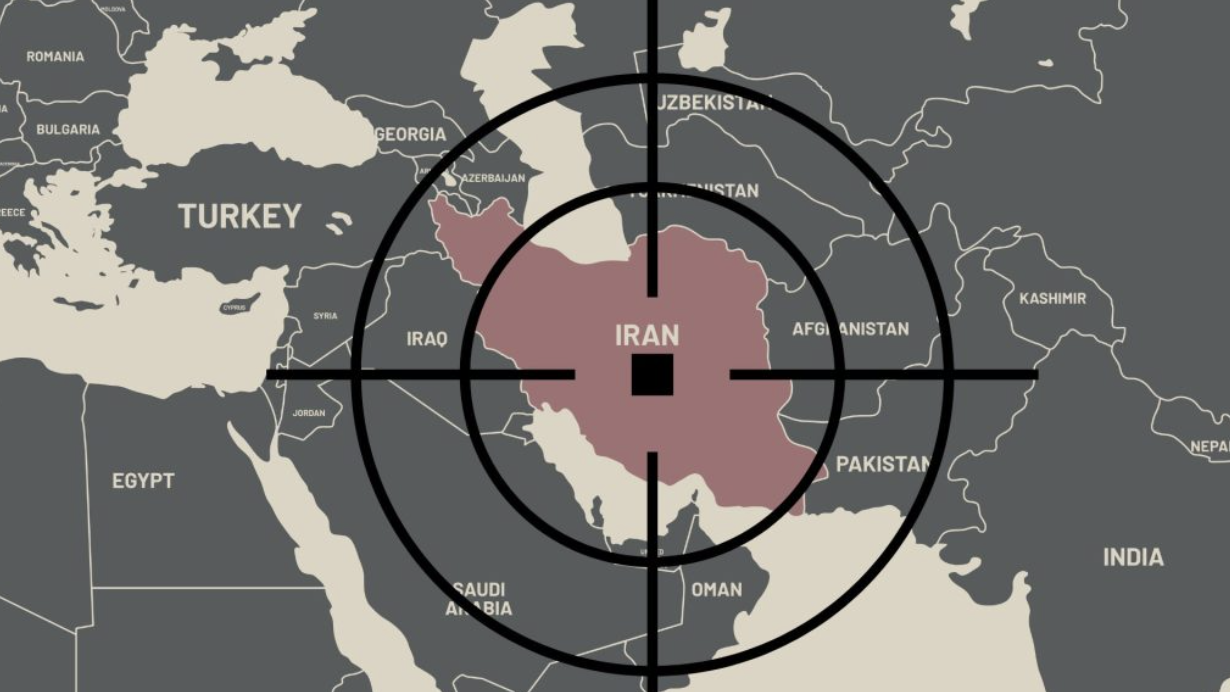
On February 28, 2026, the United States and Israel launched Operation Epic Fury, a special military operation against Iran. Within hours, Supreme Leader Ali Khamenei was dead along with dozens of senior officials. Over six weeks, U.S. Central Command struck more than 13,000 targets and hit nearly eighty percent of Iran’s nuclear industrial base. On April 8, President Trump declared a “total and complete victory.”
Operations are not graded on the number of targets destroyed. They are graded on the political conditions they produce. The administration stated four objectives: obliterate Iran’s missile arsenal, annihilate its navy, sever proxy support, and ensure Iran never obtains a nuclear weapon. Regime change was not listed as a formal objective, despite the fact that Trump urged Iranians to “take back your country” and that regime change drove the operation’s planning.
This article evaluates the operation against five criteria any serious intervention must satisfy: achieve its core political objective, secure the strategic environment it disrupted, maintain moral authority, preserve alliances, and leave the adversary weaker at the negotiating table. On every count, this operation has failed.
The Regime Still Stands
The classified National Intelligence Council assessment, completed before the first strike, concluded that even a large-scale assault would be unlikely to topple Iran’s entrenched establishment. The regime had clear survival protocols; no unified opposition was poised to take power. CIA Director Ratcliffe called Netanyahu’s regime-change outline “farcical.” Vice President Vance was the only person in Trump’s inner circle to strongly oppose the plan. The United States struck Iran anyway.
As predicted, the regime did not collapse. The IRGC consolidated control within days. Iran’s cleric chose Mojtaba Khamenei as successor, believed to hold views more hardline than his father. On March 18, DNI Tulsi Gabbard testified that the regime appeared “intact, but largely degraded” and that the intelligence community had a “longstanding assessment” that Iran would control the Strait of Hormuz. The outcome is exactly what the administration’s own analysts warned it would be.
The Nuclear Program Survives
The stated justification for this operation was to ensure Iran never obtains a nuclear weapon. That objective remains unfulfilled.
Before the strikes, Iran possessed roughly 441 kilograms of uranium enriched to 60%, enough for approximately eleven nuclear weapons if further enriched. That material remains in fortified underground tunnels at the Isfahan nuclear complex, too deep for even the Pentagon’s latest bunker-buster. IAEA Director General Grossi stated the nuclear program cannot be eliminated by military force: “The material will still be there, the enrichment capacities will be there. We will have to go back to some form of negotiation.” Reconstruction of damaged facilities, he added, would be “very possible” because “you cannot unlearn what you’ve learned.”
Iran has sealed the Isfahan tunnel entrances with earth and rubble. The IAEA has not inspected Iran’s nuclear sites since inspectors were evacuated, and a newly disclosed facility near Isfahan has never been visited by monitors. The Arms Control Association concluded that the strikes “cannot, as Trump claims, ‘ensure’ that Iran does not develop nuclear weapons.” The most important stated objective of this operation is the one airstrikes are structurally incapable of achieving.
The Strait Remains Under Iranian Control
The Pentagon claims to have annihilated Iran’s navy. That is half true, and the half that is false is the half that matters.
Iran operates two separate navies. The conventional navy was largely destroyed. The IRGC Navy, however, operates a fleet of fast-attack boats and coastal missile batteries that actually control the strait, which remains over 60% operational according to the Washington Institute. The IRGC does not rely on destroyers; instead, it relies on an estimated 5,000 to 6,000 naval mines, small boats that can deploy them faster than the U.S. can clear them, shore-based anti-ship missiles, and drones. Even the threat of mines alone deters shipping, per a declassified CIA report.
The geography favors Iran. The strait is roughly 21 miles wide, with channels shallow enough to mine. As of April 11, the U.S. is now only the beginning mine clearance using destroyers not built for the task. On April 14, the U.S imposed a full naval blockade, an escalation that acknowledged the operation failed to secure the waterway. The strongest navy in the world destroyed the wrong Iranian fleet, and seven weeks later is still fighting to control a 21-mile strait.
A School Full of Children
On February 28, roughly one hour into the campaign, a U.S. Tomahawk cruise missile struck the Shajareh Tayyebeh Elementary School in Minab. Amnesty International reported 168 people killed, including over 100 children aged 7 to 12, along with 26 teachers. The school sat adjacent to an IRGC compound that was simultaneously struck. Amnesty identifies the munition as a Tomahawk, used exclusively by U.S. forces in this conflict, and concluded the strike was a “serious breach of international humanitarian law.” The UN Special Rapporteur addressed the Human Rights Council, calling it “a grave assault on children, on education.” Over 600 schools have been damaged or destroyed across Iran.
The United States holds itself to a standard that no other military claims: that it can strike with precision, distinguishing combatant from civilian, and conduct operations within the bounds of international law. That standard is the moral foundation upon which intervention against a regime like Iran’s is justified. When the United States strikes a theocracy that executes protesters and suppresses its own people, it must be unimpeachable in its conduct. A Tomahawk guided by outdated intelligence into an elementary school during morning classes is the forfeiture of the moral authority that made intervention defensible. Against a morally illegitimate regime, the United States must be morally correct at all times because the moment it is not, it loses the only advantage that separates its use of force from anyone else’s.
The Alliances We Will Need
NATO allies have refused to participate in the U.S. blockade of the Strait of Hormuz. The United Kingdom and France declined to support it. Germany ruled out involvement entirely, calling NATO a defensive alliance not designed for this kind of intervention. Trump responded by calling NATO a “paper tiger” and warning that the alliance “won’t be there” in the future. European leaders are now building contingency plans for a “European NATO” to preserve deterrence against Russia without relying on Washington.
In the Gulf, Iran’s retaliatory strikes hit nine countries. The UAE severed diplomatic ties with Tehran. Qatar expelled Iranian military attaches. Yet Gulf states are opposed to strikes on critical infrastructure inside Iran, and their cooperation with Washington is driven by fear, not alignment.
These are the basing rights, intelligence-sharing agreements, and force-projection networks the United States will need in the next major confrontation, whether in the Pacific, in Eastern Europe, or in a conflict not yet imagined. Every alliance strained by this operation must be rebuilt before the next one begins.
Iran Dictates the Terms
If the United States won, the defeated party would not be dictating the terms at the negotiating table. Iran is.
After 21 hours of negotiations in Islamabad, Vice President Vance acknowledged the U.S. “could not get to a situation where the Iranians were willing to accept our terms.” The ceasefire was built on Iran’s ten-point proposal, which Trump called “workable.” Iran’s demands include reparations, enrichment rights, sanctions relief, U.S. troop withdrawal, and controlled navigation of the Strait under Iranian military coordination.
On the nuclear question, Iran offered a five-year enrichment pause. The U.S. demanded twenty. Iran rejected it. Vice President Vance called full Strait access “non-negotiable.” As of April 15, the U.S. has imposed a naval blockade to force the issue, an acknowledgment that Iran still holds the leverage the operation was supposed to eliminate. CNN assessed that “there is little choice for the United States and Iran other than to make a deal.”
A victorious power does not blockade a waterway seven weeks after declaring the enemy’s navy destroyed. A victorious power does not sit across from a country it bombed for forty days and fail to secure the concessions it demanded. Iran survived, came to the table, and is negotiating on its own terms. That is not what defeat looks like.
The Real Lesson
The United States possesses unmatched military power. What it has demonstrated in Iran is that military power, without realistic assumptions about the adversary or a coherent theory of how destruction becomes political advantage, produces destruction without resolution. 441 kilograms of enriched uranium remain untouched. The moral authority of the world’s greatest military is compromised. Its alliances are fraying. The adversary it sought to break is negotiating from a position that, in some respects, is stronger than the one it held on February 27. That is not a victory that was poorly communicated. It is a strategic failure that must be named as one.
***
This article was edited by Abigail D’Angelo.
 Luke Helmholz
  Sidney Levitt
  Ayden Suber