
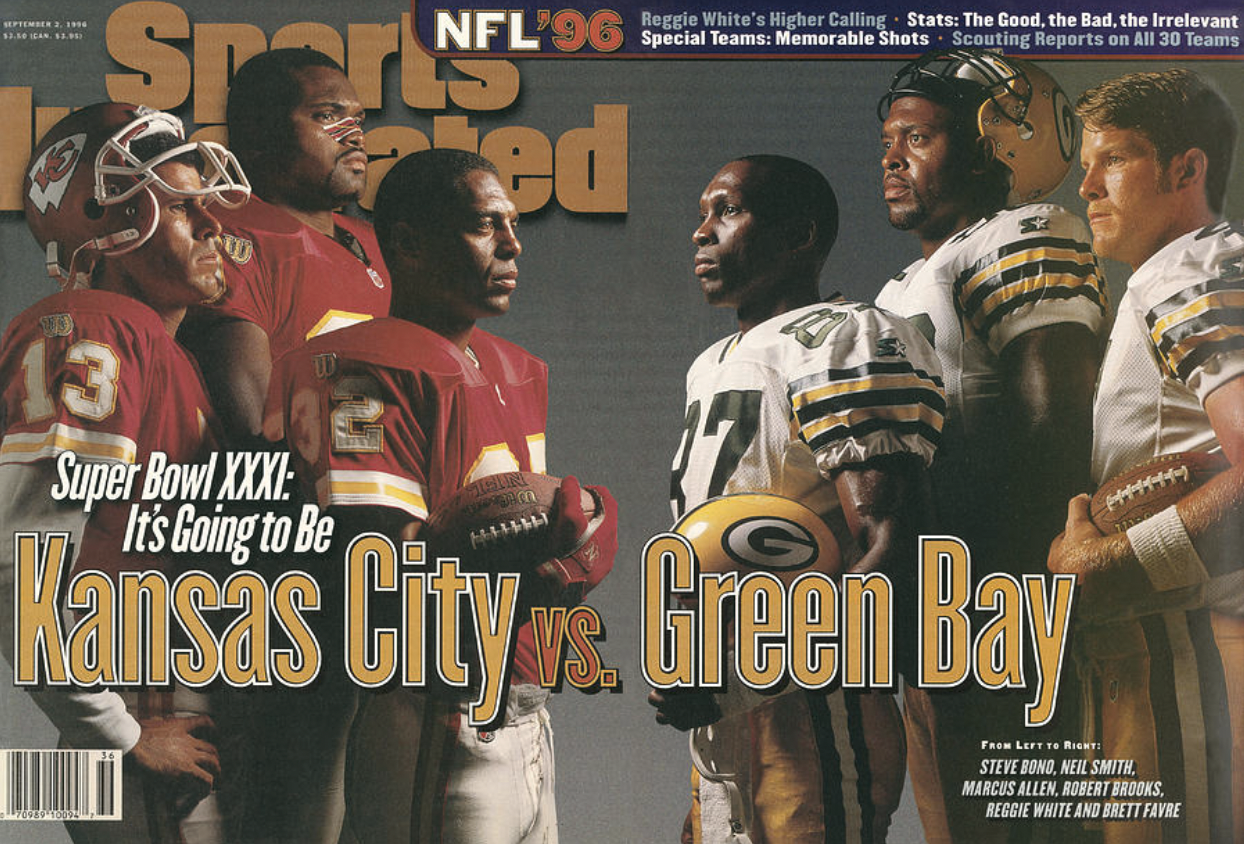
Photo via Sports Illustrated
***
The first Super Bowl, originally known as the AFL-NFL World Championship Game, took place 59 years ago during a state of political turmoil. During the late 1960s, massive anti-war movements reshaped America in response to the Vietnam War drafts. Activists engaged in efforts like protesting, draft card burnings, and music like Pete Seeger’s, “Bring ‘Em Home,” 1966 and John Lennon’s, “Imagine,” 1971. Simultaneously, the Civil Rights Movement was reshaping America through marches, boycotts, and music, including Joan Baez’s “We Shall Overcome.”
Throughout this, the Super Bowl Halftime Shows remained neutral and usually featured marching bands rather than celebrity commentary on social issues. Performances rarely reflected the activism and civil unrest simultaneously unfolding in America, much of which was through musical expression.
During a time that was full of confrontation and activism, the Super Bowl was different, serving as nothing more than an intermission. While mainstream musical artists like Pete Seeger, John Lennon, and Joan Baez used music as a form of protest, halftime performances completely avoided addressing the political issues prevalent in society at the time.
In 1993, Super Bowl XXVII marked a turning point where the halftime show began featuring household names like Michael Jackson. This was the most watched television event by the end of the decade, drawing in 134.8 million viewers. For the first time ever, the halftime show rivaled the game itself, where viewership increased during the halftime show. This show marked an important turning point in the evolution of Super Bowl halftime performances, as the NFL began treating the halftime show as an event in itself rather than background entertainment.
As the shows continued to become more memorable over the years, with recognizable performers like Diana Ross, Stevie Wonder, and Christina Aguilera, it became impossible to separate the event from broader social and cultural conversations during the rise of celebrity culture in the 1990s. An event that had once been designed to avoid political symbolism was gaining influence and momentum as it became connected with identity and activism.
In the aftermath of the 9/11 attacks, the U2 performance at Super Bowl XXXVI in 2002 served as a moment of national reflection rather than entertainment alone. During the performance, a list of 9/11 victims was projected behind them, showing that the halftime show symbolized joint national identity. Frontman of U2, Bono opened his jacket at one point to reveal an American flag, creating an image of solidarity. At this point, the halftime show was no longer detached from current events, but it still avoided political division.
By the time Kendrick Lamar performed in 2025 at Super Bowl LIX, themes of systemic inequality and the lived experience of Black Americans were embedded in the performance. Rather than serving as details, Lamar’s show used symbolism through red, white, and blue-clothed background dancers forming and splitting in a way that mirrored the American flag. A feature from Samuel L. Jackson, actor and former Civil Rights Activist playing the role of Uncle Sam, questioned whether Lamar was “playing the game the right way,” symbolizing the pressure placed on Black Americans to shape their identity to fit within mainstream definitions of acceptability. Unlike earlier performances that emphasized collective unity, Lamar’s show explicitly confronted division in America head-on.
In 2026, the halftime show evolved into a platform for global identity, as seen during Bad Bunny’s performance at Super Bowl LX. As the first solo Spanish-language artist to perform at the Super Bowl, Bad Bunny highlighted Puerto Rican culture through his music and visuals, while also challenging the English-dominated idea of American culture. He celebrated his heritage, and also highlighted America’s ever-evolving diverse identity through a parade of flags across the Americas.
Earlier renditions of this performance were neutral or featured subtle symbolism, whereas Bad Bunny’s was based entirely on cultural identity. The debate surrounding the performance was inherently political as it received praise for elevating Latino voices, while also receiving backlash for not being in English.
America has consistently been a nation filled with political debate and turmoil, but rather than simply a reflection of the American political landscape The shift towards explicit political and cultural expression in Super Bowl halftime shows reflects the growing visibility and influence musical artists have on American society. As the halftime show gained traction and became one of the most-watched events on television, performers gained the ability to highlight identity and social issues while connecting with a massive audience. In a country where media, celebrities, and social issues are intertwined, the halftime stage was bound to evolve into a platform where performance and social commentary go hand in hand.
***
This article was edited by Amethyst Stencik and Anthony Medina.
 Glenmarie Rios Rodriguez
  Ayden Suber
  Isabella Villalobos